Federal incentives still available for a short time. Contact us to get your project started in time.

May 8, 2026
Pasadena Homeowners: New Solar + Battery Rebates Are Here
What PWP's new incentive program means for your home and your energy bill

TL;DR: Pasadena Water & Power has launched new rebates for solar and battery storage, with meaningful savings for homeowners. To qualify for battery incentives, systems must be enrolled in a Demand Response or Virtual Power Plant program—so planning ahead matters.
If your electricity bill has been climbing and you've been thinking about solar, this is worth a few minutes of your time. Pasadena Water & Power just launched a new rebate program for both rooftop solar and home battery storage — and the numbers are genuinely significant.
Here's a plain-language breakdown of what the program covers, who it's for, and how to make the most of it.
So What Did PWP Actually Launch?
It's a two-part rebate program: one incentive for installing rooftop solar, and another for adding a home battery. You can take advantage of one or both — and combining them is where things really get interesting.
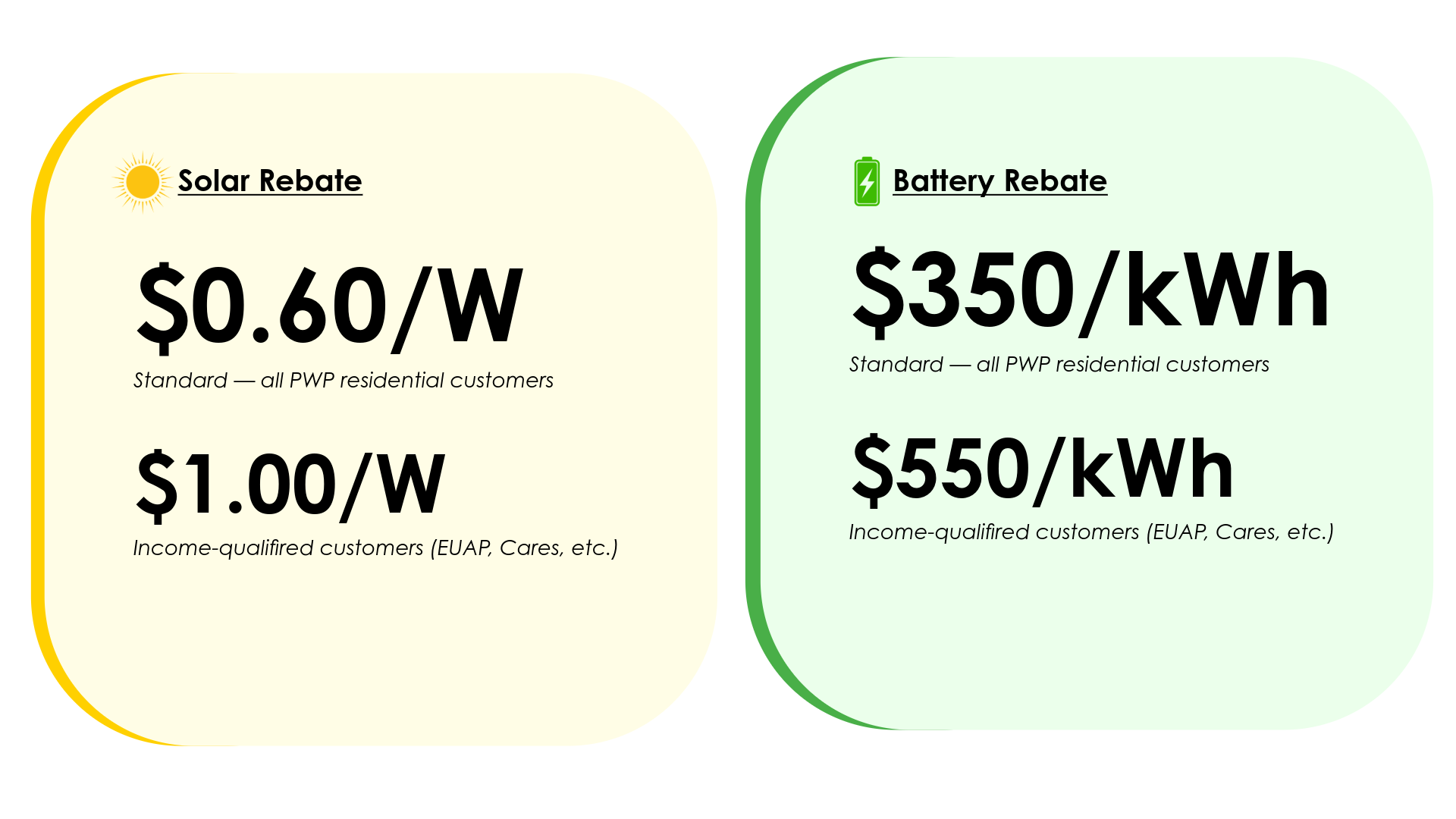
And here's a bonus worth knowing: for a limited time, PWP is waiving permit, plan review, and inspection fees for solar and battery projects. That's real money back in your pocket before the rebate check even shows up.
What Does That Actually Look Like in Dollars?
Let's put some real numbers on this. Take a typical Pasadena home with a 7-kilowatt solar system:

Actual amounts depend on your system size and eligibility. We're happy to run the real numbers for your specific home — no pressure, just honest info.
Stack a solar + battery install together, and you're looking at some of the most meaningful local incentives we've seen in years.
Why Are So Many Homeowners Adding Batteries Right Now?
Honestly, it's not just about the rebate.
More Pasadena families are adding batteries because they want actual control over their own power. When the grid goes down — and it does — a battery keeps your lights on, your fridge running, and your family comfortable. No generator noise, no extension cords, no scrambling in the dark.
"Solar generates power — batteries help you use it on your terms."
There's a financial angle too. Most utility rates are highest in the evenings, right after your solar panels stop producing for the day. A battery lets you store the energy your panels made during the day and use it at night — so you're not buying expensive peak-rate power from the grid when you don't have to.
And with PWP rates trending upward over time, having your own stored energy is starting to feel less like a luxury upgrade and more like a smart long-term call.
One Thing to Know Before You Apply for the Battery Rebate
⚠️Heads Up — There's a Program Participation Requirement
To qualify for PWP's battery rebate, your system needs to be set up to participate in PWP's Demand Response (DR) or Virtual Power Plant (VPP) program. Think of it as occasionally letting PWP draw a small amount from your battery during high-demand periods — kind of like being part of a neighborhood energy team.
You'd be enrolled for at least 36 months once that program launches, and you'd need to sign up within 90 days of the program going live. If you skip enrollment without an approved exemption — or exit in the first year — PWP may reclaim a portion of your rebate.
This isn't a dealbreaker, and it's not something most homeowners will notice day-to-day. But it's important to know upfront. When we design a system for you, we make sure it's configured correctly from the start so there are no surprises down the road.
Is This a Good Fit for Your Home?
This program is probably worth exploring if you pay a high electricity bill and want to bring it down meaningfully, want backup power so an outage doesn't throw off your whole household, or plan to stay in your home for at least several more years and want to get ahead of rising energy costs.
Already have solar but no battery? It's still worth a conversation. Adding storage to an existing system is often simpler than people expect — and the battery rebate is available for standalone installs too.
How Do You Get the Ball Rolling?
Here's how the process works, in plain terms:
- Look at your usage
Your electricity bill tells us a lot. We'll look at how much you're using, when you're using it, and what size system actually makes sense for your home. - Design your system
We'll put together a solar and/or battery setup tailored to your roof, your goals, and your budget — and make sure it meets all of PWP's rebate requirements. - Handle the paperwork
PWP requires licensed contractors for both solar and battery installs. We take care of permits, interconnection, and the rebate application — you don't have to chase any of it down yourself. - Install and collect
Once your system is live and approved, your rebate check typically arrives within 6–8 weeks.
Our team handles engineering, roofing, electrical, and project management in-house — no subcontracting, no hand-offs, no unexpected surprises halfway through your project.
Frequently Asked Questions:
Q: Do I have to install solar and battery at the same time?
A: No, you can install them separately, and each has its own rebate. That said, doing them together often makes financial and logistical sense, and it's typically easier to get everything configured correctly in one project.
Q: Does my home need to be a certain size to qualify?
A: There's no size requirement for your home, but you do need to be a PWP residential electric customer, and your system must be installed on your property and meet PWP's interconnection capacity limits. Your installer will verify this during the design phase.
Q: Can I get the rebate if I lease my solar system or sign a PPA?
A: No. PWP's rebates only apply to customer-owned systems. If your panels are leased or financed through a Power Purchase Agreement (PPA), you won't qualify. The system has to be yours.
Q: I already have solar. Can I still get the battery rebate?
A: Yes — the battery rebate is available for standalone installs, not just combined projects. Give us a call and we'll walk through whether your existing setup is compatible and what the process looks like.
RELATED ARTICLES:
Categories
residential-solar
battery-storage
Our Affiliations


